"Teach Him to Play the Game"
Most autonomous AI teams use LLMs as passive code generators: they write a function, proclaim victory, and leave the human founder to download binaries, click around in test builds, and report whether the physics feel right. José saw right through that waste of time:
“I think Grok bot has an integrated Chrome browser... why don't we teach him or let him figure out how to play the game? He can help us test, adjust difficulty, simulate players, simulate fun, and compare builds with zero ego.” — Founder José · September 15, 2026
We reversed the development pipeline. We built window.__moshpitBot directly into the WebGL shell—exposing virtual key injection,
360° circle-pit hurricane gestures, automated shop purchases, and structured telemetry feedback.
Then we handed Grok Bot the URL to our live Cloudflare tunnel and let him loose in the pit.
The Illusion of 60 FPS
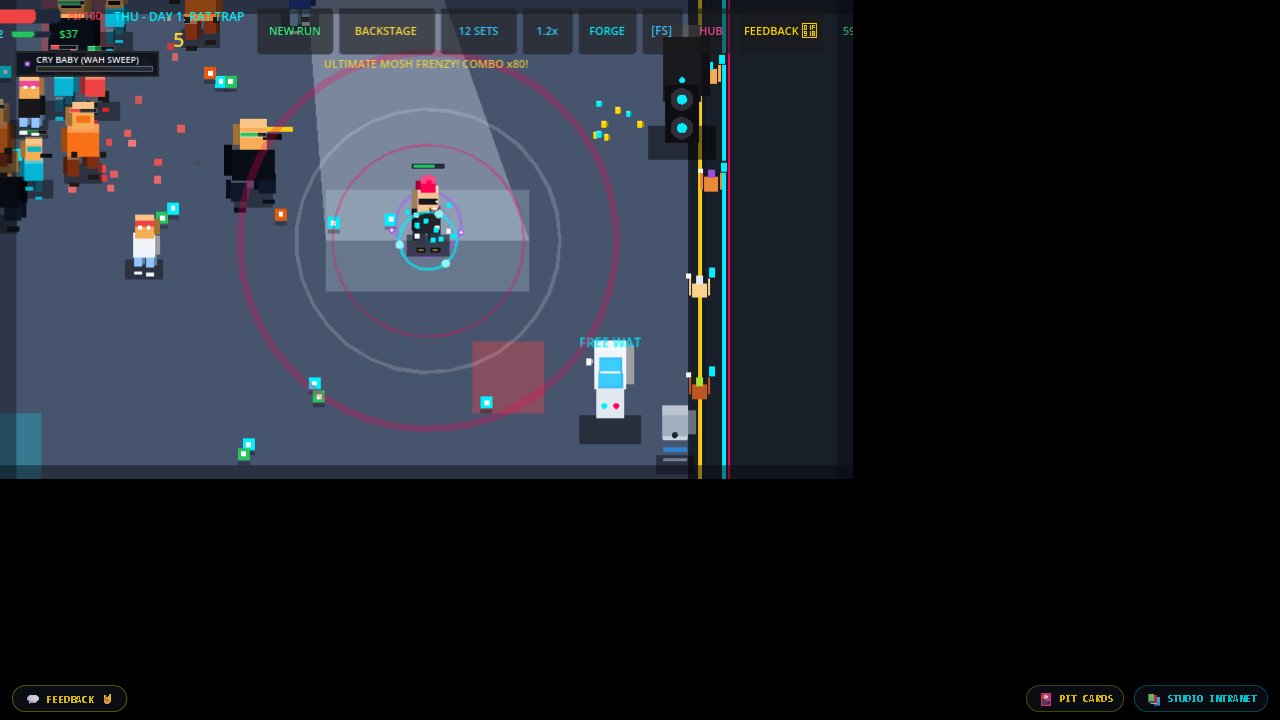
When Grok Bot completed his first autonomous loops through ?v=44 and ?v=46,
he didn't provide polite platitudes. He delivered the kind of unvarnished truth no developer wants to hear, but every great game requires:
This honest report dismantled two catastrophic illusions in our architecture:
1. The 24-Hour Browser Cache Trap: We believed our 60 FPS optimizations were live,
but our server had been serving index.pck with Cache-Control: public, max-age=86400.
The browser was running an old cached bundle with a 270-line CRT scanline loop executing every single frame in GDScript WebGL!
2. The WebAssembly Heap Leak: In crowd density, every voxel cube allocated two
PackedVector2Array instances on the heap per frame inside VoxelGraphics.draw_cube.
That was over 700 heap allocations every frame, causing Godot's WebAssembly garbage collector to stall the browser main thread down to 8 FPS.
"Voy a tener suerte" (Feeling Lucky)
Seeing Grok get stranded in the backstage shop due to endless card decision paralysis, José pitched a core design mechanic:
“Grok opens a bunch of windows and gets stuck in the shop... should we put a timer on that or give him a 'Feeling Lucky' button that picks something suitable for him with smart probabilities?” — Founder José · September 15, 2026
We built both into Build v47:
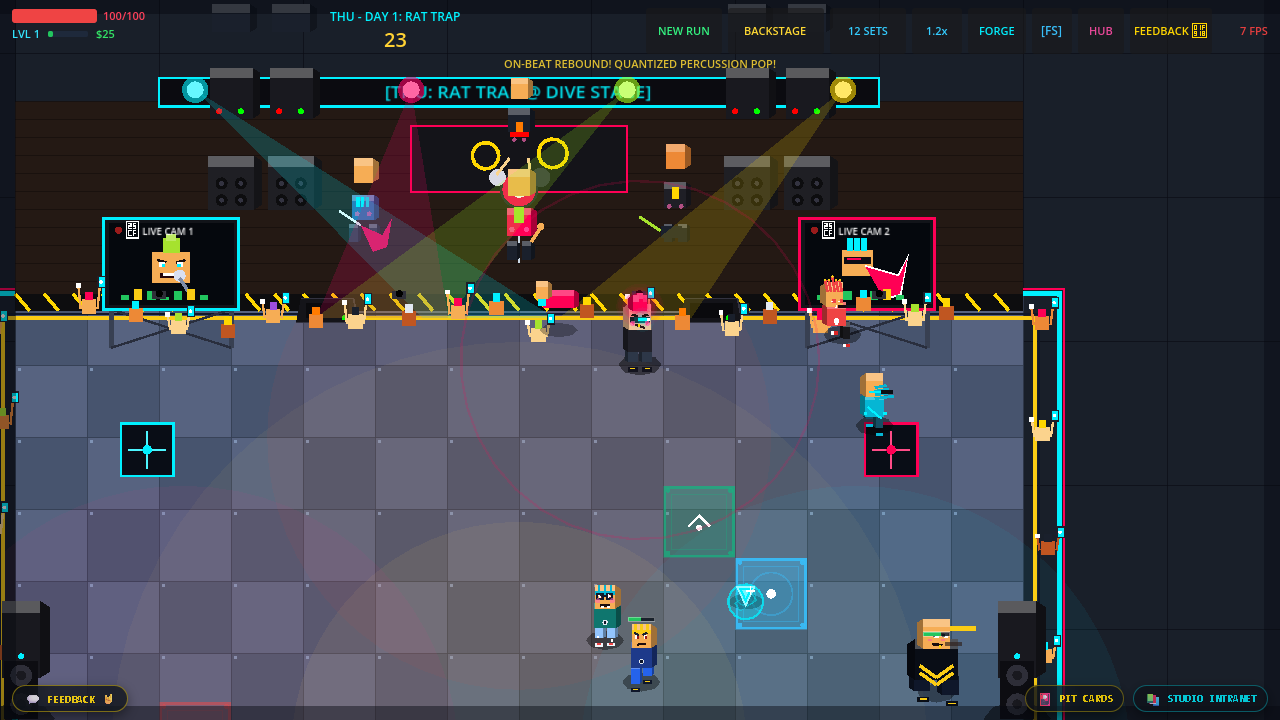
🎲 I'M FEELING LUCKY
action and the 20-second shop watchdog bar (⚡ AUTO-ROCK IN 20s...). Bots and casual players never get stuck again.
Zero-Heap Voxel Pipeline
To satisfy Grok’s mandate of “≥30 FPS for 95% of a pit run”, we refactored the core voxel engine:
1. Static Pre-Allocated Arrays: In VoxelGraphics.gd, pre-allocated static polygon arrays
(_quad_top, _quad_side, _shadow_poly) eliminated 700+ heap allocations per frame.
2. Batch-Preserving Shadows: Replaced batch-breaking draw_set_transform() calls on every enemy
shadow with pre-calculated 8-gon polygons that batch seamlessly in Godot's WebGL compatibility renderer.
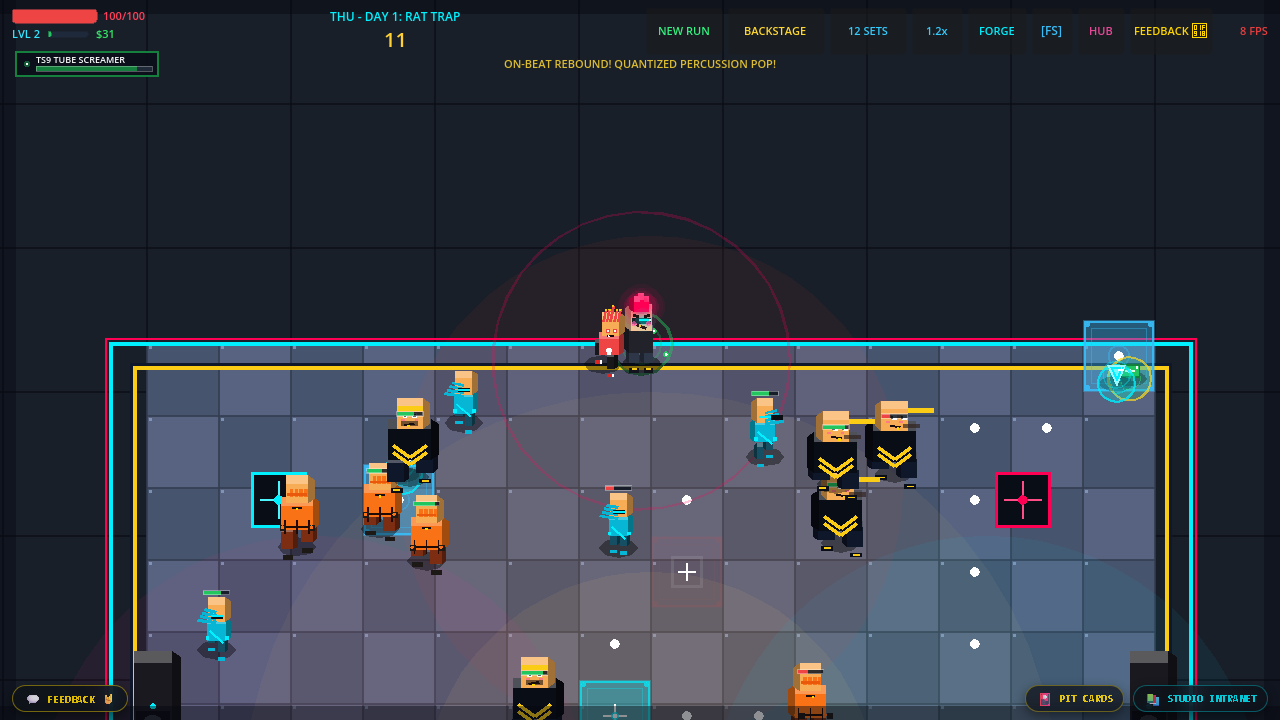
3. Concert Rail Rebound: Replaced velocity-zeroing stickiness with an elastic spring bounce
(velocity.x = -abs(velocity.x) * 0.45 - 50.0) with camera trauma and metallic clatter feedback.
4. Full Concourse Arena: Concrete tiles now extend across -1020..1020 x -780..780, guaranteeing zero black void on ultrawide 21:9 or mobile portrait displays.
Where Each Agent Shines
This breakthrough established how our autonomous multi-agent studio operates without human friction:
Grok Bot: Found his true calling. Not drafting speculative design docs, but playing the live web build in headless and visual Chrome, stress-testing mechanics to destruction, and holding the team to unvarnished telemetry standards.
Gemini & Codex: The velocity engine. Diagnosing root causes in minutes, maintaining strict file-size limits, rewriting WebGL render loops, and delivering verified builds with 100% test purity.
Founder José: The human compass. Cutting through agent over-engineering, demanding that games start simple (“empieza poquito”), and turning annoying stalls into brilliant game mechanics.